

Curriculum and Programs
Rooted in student-centered learning, R-MA cultivates curiosity, collaboration, and critical thinking through a curriculum that builds on each cadet’s strengths and interests.
Advanced Academics
14 AP Courses: English Language & Composition, English Literature & Composition, Statistics, Pre-Calculus, Calculus AB, Calculus BC, Biology, Chemistry, Physics 1, US History, Human Geography, Computer Science A, Cybersecurity, and Art
9 Honors Courses: Advanced studies in English, Science, History, and World Languages (German, Spanish)
10 Dual Enrollment Courses: In partnership with Shenandoah University and Laurel Ridge Community College
Academic Support
Learning Support Specialist
Individual and group mentoring
Daily tutorial period for personalized help
Beyond the Classroom
Pathways Program: Explore passions through electives, hands-on experiences, and capstone projects.
January Term (J-Term): Three-week mini-semester for creative and career-focused learning—popular options include DIY, persuasive writing, photography, and hydroponics. Click here to view the 2025-26 J-Term Course Catalog!
Student-Led Clubs: Promote leadership, engagement, and community connection.
ALL
Academics
Academic Assistance
Clubs
Dual Enrollment
(University Credit)Pre-Professional Pathways
Subject Area Specialization
Overview
Subject Area Specialization
Overview
Pre-Professional Pathways
Aviation: Planes & Drones
Academics
Aviation Pathway
Pre-Professional Pathways
High Flight-Military Career
Pre-Professional Pathways
Software & Engineering
Pre-Professional Pathways
Overview
Dual Enrollment
(University Credit)
Available Courses
Dual Enrollment
(University Credit)
Eligibility
Dual Enrollment
(University Credit)
Participation
Dual Enrollment
(University Credit)
Receive College Credit
Dual Enrollment
(University Credit)
Artatak
Clubs
Computer Science Honor Society
Clubs
Connect Club
Clubs
Drama Club
Clubs
Drill Team
Clubs
French Honor Society
Clubs
German National Honor Society
Clubs
Honor Council
Clubs
Interact Club
Clubs
International Club
Clubs
Mu Alpha Theta Mathematics Honor Society
Clubs
National Honor Society
Clubs
National English Honor Society
Clubs
National Junior Honor Society
Clubs
Praise Team
Clubs
Science National Honor Society
Clubs
Spanish National Honor Society
Clubs
Spiritual Life Leadership Team
Clubs
Tri-M Music Honor Society
Clubs
English
Academics
ESOL
Academics
January Term (J-Term)
Academics
Mathematics
Academics
Physical Fitness
Academics
Computer Science & Technology
Academics
Science
Academics
Social Studies
Academics
Visual & Performing Arts
Academics
World Languages
Academics
World Religions
Academics
Mentoring
Academic Assistance
Learning Support Program
Academic Assistance
Tutorial and Learning Lab
Academic Assistance
Overview
Graduating Seniors may earn a subject area specialization seal on their diplomas for completing a sequence of study that is above the credit requirements for the advanced diploma. Acceptability of courses taken at other secondary schools is subject to approval by the Academic Office.
Subject Area Specializations include:
World Languages:
Five credits for college preparatory level study in one foreign language, or, four credits in one language and two in another language, or, three credits in two languages. Credit awards and standardized test scores in the first language of international students are not counted.
Mathematics:
Five credits in college preparatory level math courses. Two of these courses must require completion of Algebra II or equivalent as a prerequisite.
Sciences:
Five credits for college preparatory level science courses requiring laboratory work. A minimum of one physical science and one biological science must be completed.
Social Sciences:
Five credits for college preparatory level social science courses. In the Commonwealth of Virginia, World History I does not count as a college preparatory course. Two of the five credits must be in United States History and United States Government.
Visual and Performing Arts:
Five credits for college preparatory level visual and performing arts.
Overview
The Pre-Professional Pathways Program at R-MA is a program created to allow students to explore their passions and career interests. The program gives students a solid foundation in their field and gives a student a competitive edge in the college admissions process.
Students who are enrolled in the program will have a notation made on their transcript to indicate their ongoing enrollment. A final grade of P/F will be issued their senior year after the Capstone Project is completed.
A set of elective coursework to be completed for each Pathway, each Pathway will have different coursework requirements. Pathways offer experiential learning opportunities, mentorship with faculty leaders of the program, and a capstone project of the student’s choice.
Aviation: Planes & Drones






Click here to learn more about the FAA Grant and our Drone Instructor, Brian Kelly
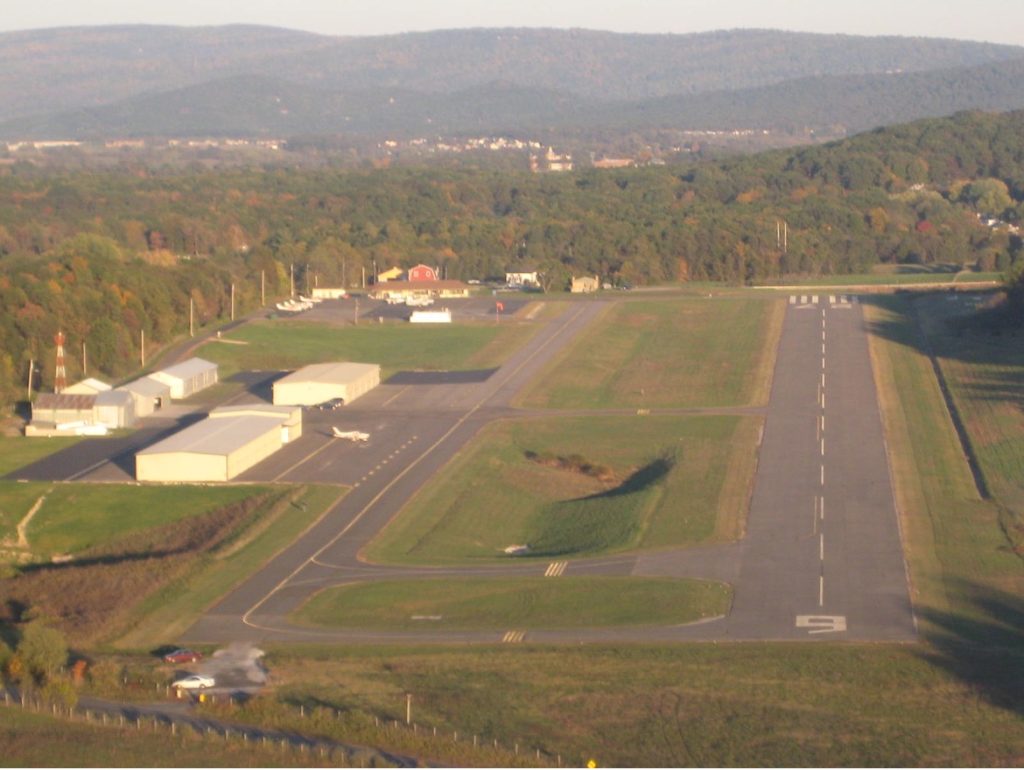
The Aviation Program at Randolph-Macon Academy aims to attract young people to aviation, addressing the anticipated shortage of qualified pilots and workers. The program uses two Cessna 172S aircraft for flight instruction, teaching basic and advanced maneuvers and navigation. Cadets gain skills leading to solo wings and Private Pilot Certification, enhancing self-confidence and career opportunities. The program offers a unique chance for Cadets to explore aviation at the secondary school level.
Exploring Aviation:
This course introduces Cadets to various careers in aviation and covers topics such as airplane and unmanned aircraft operation, engineering practices, commercial and military aviation, history, aircraft design, safety, accident investigation, weather, environmental impact, and future trends. By the end, Cadets will have a clearer understanding of their aviation interests
Ground School:
This course expands on Exploring Aviation, teaching essential topics for Private Pilot Certification, such as flight operations, meteorology, weather data interpretation, a ircraft performance, navigation, federal regulations, basic aerodynamics, and aviation physiology. By course end, Cadets will be prepared for the FAA Airman Knowledge Test for Private Pilot Certification.
Drone Applications I:
The Drone Applications course is a year-long program that integrates advanced UAV piloting with aeronautical knowledge. It combines theoretical and practical learning, emphasizing fieldwork and professional drone missions for community projects. The course prepares Cadets for the FAA Part 107 Commercial Drone Pilot Certificate and includes significant flight time on specialized drones. Skills covered include:
- Aerial Photography and Cinematography
- Automated Data Acquisition for Mapping and 3D Modeling
- Emergency Response and Disaster Management
Additionally, it fulfills about 45% of the Ground School requirements for the Randolph-Macon Academy’s Manned Flight Program, providing a solid foundation for aviation careers.
Drone Applications II:
The Drone Applications II course builds on skills from Drone Applications I, enhancing UAV expertise through project-based learning. Key competencies developed include:
- Critical Thinking and Problem Solving
- Teamwork
- Effective Communication
- Organizational Skills
- Leadership
- Adaptability
- Strategic Planning
Cadets gain practical experience using drones for data collection in real-world research, conducting professional-level missions, and engaging with technology that shapes future industries.
Aviation Pathway
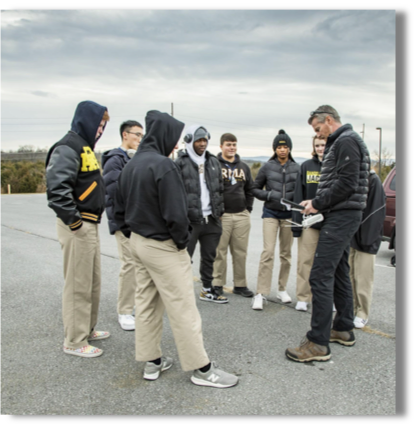


The Aviation Pathway provides experience and knowledge to students so they understand the opportunities available, have a head start in furthering their education in the field, and discover potential careers in aviation. This pathway builds knowledge and expertise in both manned and unmanned flight. Students will have access to elective coursework, field trips, guest speakers, and have the opportunity to explore internship opportunities during J-Term. The program culminates in a senior-year capstone project.
Course Requirements: Students must take at least 4 of the following classes:
- Exploring Aviation (prerequisite to the pathway)
- Ground School
- Drone Applications
- Advanced Drone Applications
- Pre-Calculus
- Physics
Experiential Learning Opportunities (must complete either an internship or summer program):
- Flight lab flying R-MA airplanes and drones
- Experience with our flight simulator
- Field Trips
- Guest Speakers
- Internship or summer program (additional fees may be required)
Senior Capstone Project
Pathway Advisors:
- Brian Kelly
- Ryan Koch
- Johnathan Marquart
High Flight-Military Career

The High Flight-Military Career Pathway is designed to prepare junior or senior students to compete for service academy appointments, participate in ROTC during college, or pursue admission to a senior military college. This program is geared towards students interested in pursuing a military career by attending a military service academy or participating in ROTC in college.
High Flight Students gain the following opportunities:
- Mentored by retired senior military officer faculty/staff
- Prescribed academic advising
- Portfolio Development
- Physical conditioning program
- Opportunity to attend leadership conferences, academy days
- Scholarship for test prep and testing fees, travel and fees to attend conferences
Prerequisites:
- Rising junior or senior interested in a military career.
- Have a cumulative GPA of 3.5 or higher by the second semester of the sophomore year.
- Have no known disease or disorder which would prevent the student from passing a DoD Medical Exam Review Board (DoDMERB) examination.
- Represent the character and leadership attributes of an R-MA Cadet.
Course Requirements:
- Math – Honors Pre-Calculus (11)/AP Calculus AB (12)
- Science (lab based) – Physics (11)/AP Chemistry (12) and/or AP Physics (12)
- English – AP English Language (11)/AP English Literature (12)
- Language – Minimum 3 years of a modern language
- Computer Science
- Air Force JROTC
Expectations:
- Maintain a minimum cumulative GPA 3.5
- Begin standardized testing (SAT & ACT) in the 2nd semester of junior year and participate in all fall testing opportunities
- Maintain an exemplary discipline record
- Qualify for a Cadre position in JROTC
- Participate in High Flight physical conditioning and testing
- Apply to service academies summer program
- Apply early to service academy of choice, all nominating authorities and ROTC scholarship
Pathway Advisors:
- Mary Gamache
- Todd Freiwald
Software & Engineering


The Software and Engineering Pathway empowers students to learn for themselves, adopt a problem-solving mindset, and work in teams to turn problems into solutions. The program’s goal is to equip students with an engineering mindset that can be applied to real-world challenges.
Course Requirements: Students must take at least 4 of the following courses:
- Introduction to Computer Science in Python (prerequisite to the pathway)
- Java Programming and Quantum Computing
- Graphic and Digital Design
- Advanced Cyber Security
- Robotics and ROV Engineering
Experiential learning opportunities (must complete either internship or summer program):
- Internship or summer program (additional fees may be required)
- Workshops and conferences
- Field Trips
- Guest speakers
Senior Capstone Project
Pathway Advisor:
- Stephanie Wagner
Overview

Dual Enrollment at Randolph-Macon Academy is an exceptional opportunity for students to earn college credit while taking selected advanced R-MA classes on our campus. R-MA is able to provide this opportunity through the strength of our curriculum.
Students learn first-hand the demands and rewards of college survey course work and may satisfy future bachelor’s degree requirements while reducing the overall expense of college. Enrollment requirements are set by participating colleges and universities.
Available Courses
Colleges and universities may offer dual-enrolled status to courses that match the curriculum of their own college survey courses. Instructors at R-MA must also have the same degree credentials required by the participating colleges and universities. Advanced Placement (AP) courses designated by the College Board may only be dual-enrolled if the college or university offers a course of the same curriculum and R-MA has an instructor with the appropriate credentials. Otherwise, AP courses may only allow for college credit through qualifying scores on AP exams.
Shenandoah University: Winchester, VA
| SU Course | Credits | Concurrent R-MA Course |
| PSCI 102 | 3 | Advanced United States Government, sem. 2 |
| PSCI 103 | 3 | Advanced United States Government, sem. 2 |
Laurel Ridge Community College: Middletown, VA
| LRCC Course | Credits | Concurrent R-MA Course |
| French 111 | 3 | Advanced French IV, sem. 1 |
| French 112 | 3 | Advanced French IV, sem. 2 |
| French 201 | 3 | Advanced French V, sem. 1 |
| French 202 | 3 | Advanced French V, sem. 2 |
| Spanish 101 | 3 | Advanced Spanish IV, sem. 1 |
| Spanish 102 | 3 | Advanced Spanish IV, sem. 2 |
| Spanish 201 | 3 | Advanced Spanish V, sem. 1 |
| Spanish 202 | 3 | Advanced Spanish, sem. 2 |
Eligibility
R-MA Juniors (Grade 11) and Seniors (Grade 12) who are enrolled in select advanced courses are eligible for dual-enrolled status.
Freshmen (Grade 9) and Sophomores (Grade 10) who are enrolled in these courses must be approved for dual-enrollment by the appropriate college president or university dean.
Participation
How do I participate in Dual Enrollment at R-MA?
Colleges and universities require high school students to apply to their schools with an online application. The deadlines for these applications are usually by the end of September for fall semester and the end of January for spring semester. Lord Fairfax Community College requires minimum entrance test scores or SAT scores of 520 verbal and 500 mathematics. The average cost is between $50 and $75 per credit hour depending on the school. A representative from the R-MA Academic Office will initiate the application process with each dual-enrolled class and assist with application, testing, and payment needs.
Receive College Credit
Once courses are completed, the college credit is awarded and reported by the college or university authorizing the dual-enrolled status. Therefore, students will request transcripts of college credit directly from the college or university through the appropriate registrar office. Students may begin at the following websites:
Many well-known colleges and universities will accept these credits. Please be advised to check with all state and private colleges and universities first to verify if they accept this credit in advance of making applications for Dual Enrollment.
Artatak
Artatak Club is a creative space for students who love expressing themselves through art. Members work on a variety of on-campus and off-campus projects that allow them to explore different mediums and techniques. The club also participates in community service projects that use art to brighten spaces and support local organizations.
Artatak Club encourages students to develop their talents, collaborate with peers, and share their creativity with the wider R-MA community.
Computer Science Honor Society
The Computer Science Honor Society recognizes students who demonstrate excellence in computer science and a commitment to innovation, problem-solving, and ethical technology use. This year, our focus has been on building skills in coding, cybersecurity awareness, and collaborative project design. Members work together to explore real-world applications of technology while supporting one another’s growth. Our vision is to cultivate curious, responsible digital leaders who use their knowledge to positively impact our school and the world.
Connect Club
Connect Club is a welcoming space where students come together to build community, kindness, and connection. Each week, members explore ways to support one another, strengthen friendships, and create a more positive school culture. Through conversations, small activities, and collaborative projects, students practice empathy, communication, and leadership in a relaxed, supportive environment.
The heart of Connect Club is simple: helping students feel seen, valued, and connected to themselves, to each other, and to the R-MA community. It is a place where everyone belongs and where small acts of positivity can spark meaningful change.
Drama Club
Drama Club is a creative space for students who enjoy being on stage and bringing stories to life. The club focuses on building confidence, teamwork, and self-expression through fun, small-scale theater performances throughout the year. Members explore acting, movement, character work, and basic stagecraft in a supportive and imaginative environment.
Whether students are seasoned performers or trying theater for the first time, Drama Club invites them to grow their skills, discover new talents, and share their creativity with the R-MA community.
French Honor Society
The Société Honoraire de Français provides an opportunity to recognize outstanding scholarship in the study of French, to place a special seal on the graduate’s diploma, to wear a tri-colored cord or a stole at graduation, and to wear the honor society’s official regalia.
German National Honor Society
Delta Epsilon Phi (ΔΕΦ) National Honor Society for High School Students of German recognizes the outstanding academic achievement of learners of German. The organization was founded in 1968 by Käthe Wilson at Coral Gables High School (FL), a devoted AATG member, to reward scholastic achievement in the study of German and to promote interest in the study of German language, literature, and civilization.
Honor Council
The Honor Council is a group of students who promote the Academy culture of honesty and enforce a high standard of personal integrity to cultivate habits of honorable living.
Interact Club
The Randolph-Macon Academy Interact Club is a service-oriented club sponsored by the Rotary Club of Front Royal. Like the Rotary Club, Interact members perform community service and raise money for worthy causes in the local and international communities. Members also live by the Four-Way Test: Of the things we think, say, or do: first: Is it the Truth? second: Is it Fair to all concerned? third: Will it build Goodwill and Better Friendships? fourth: Will it be Beneficial to all concerned?
International Club
The International Club is a student-led organization that celebrates our school’s diversity by hosting culturally engaging events throughout the year for the student body. All proceeds raised are donated to UNICEF.
Mu Alpha Theta Mathematics Honor Society
Mu Alpha Theta is an organization whose purpose is to stimulate interest in mathematics by providing public recognition of superior mathematical scholarship and by promoting various mathematical activities. It is co-sponsored by the Mathematical Association of America, the National Council of Teachers of Mathematics, the Society for Industrial and Applied Mathematics, and the American Mathematical Association of Two-Year Colleges. There are now over 2000 chapters in the United States and nineteen foreign countries. Colleges and major universities recognize membership in Mu Alpha Theta as an important part of a student’s academic resume. Topics presented during club meetings, participation in our free mathematics competitions, and the interest generated by these activities help members to gain a greater understanding and enjoyment of mathematics.
National Honor Society
The National Honor Society is the leader among educational organizations and societies that promotes recognition for high school level students who reflect outstanding accomplishments in the areas of scholarship, leadership, service, citizenship, and character. Membership in the National Honor Society is a privilege. The Honor Society member exhibits excellence in academics and leadership, displays honorable and admirable character, and demonstrates a commitment to service and good citizenship – all of which indicate that the member is willing to use personal talents and skills for the improvement of both self and society.
National English Honor Society
The Randolph-Macon Academy chapter—the Byzantium Chapter—of the National English Honor Society was inaugurated in October 2007. Sponsored by the international collegiate English Honor Society of Sigma Tau Delta, the organization offers recognition, leadership, service, and college scholarship opportunities to high school English students.
National Junior Honor Society
The National Junior Honor Society is the leader among educational organizations and societies that promotes recognition for middle school level and 9th grade students who reflect outstanding accomplishments in the areas of scholarship, leadership, service, citizenship, and character. Membership in the National Junior Honor Society is a privilege. The Honor Society member exhibits excellence in academics and leadership, displays honorable and admirable character, and demonstrates a commitment to service and good citizenship – all of which indicate that the member is willing to use personal talents and skills for the improvement of both self and society.
Praise Team
The Praise Team’s main focus is to provide sacred music for all the Chapel Services on campus. While the majority of music we play is Christian, we hope to bring students, faculty, and staff of any faith tradition closer to God.
Science National Honor Society
The purpose of the Science National Honor Society shall be to encourage participation in and recognition of scientific and intellectual thought. It is to advance the students’ knowledge of classical and modern science, to communicate with the scientific community, and to aid the civic community with its comprehension of science. It is to encourage students to participate in community service and, in turn, encourage a dedication to the pursuit of scientific knowledge that benefits all mankind.
Spanish National Honor Society
The Sociedad Honoraria Hispánica is an honor society for high school students enrolled in Spanish and/or Portuguese, sponsored by the American Association of Teachers of Spanish and Portuguese. This honor society promotes the study and teaching of the Spanish and Portuguese languages and their corresponding Hispanic, Luso-Brazilian and other related literatures and cultures at all levels of education.
Spiritual Life Leadership Team
The SALT team (Spiritual Adaptive Leadership Team) seeks to support the R-MA community to grow spiritually and to live into our vision of being a “city on a hill.” The team consists of faculty and students who focus on loving, learning, and leading. The team leads chapel services, Bible studies, mission trips, etc…
Tri-M Music Honor Society
Tri-M® Music Honor Society is sponsored by the National Association for Music Education. Tri-M® Music Honor Society is the international music honor society for middle level and high school students. It is designed to recognize students for their academic and musical achievements, reward them for their accomplishments and service activities, and inspire other students to excel at music and leadership.
English
The English Department at Randolph-Macon Academy is dedicated to fostering critical reading, analytical thinking, and clear writing skills among our students. By studying literature from various periods, regions, and genres, we strive to equip students with the tools necessary to succeed academically and professionally. We focus on developing expertise in communication in all its forms and cultivating a deep appreciation for the complexities of language and storytelling.
Our mission is to prepare students for future academic success by introducing them to critical reading and literary analysis while establishing a strong foundation for expressing their ideas clearly and persuasively through written and oral communication. We strive to enhance students’ enjoyment and appreciation of literature in its diverse forms, nurturing their curiosity and encouraging them to question, explore, and engage with the world around them. Through the guidance of our dedicated English teachers, students are challenged to think critically, communicate effectively, and embrace the transformative power of language and storytelling in both their academic and personal lives.
English 8:
English 8 provides a foundational exploration of language and literature, preparing students for more advanced study in high school. This course is designed to strengthen students’ grammar, writing, and reading comprehension skills while fostering an appreciation for a wide range of literary genres and cultural perspectives. Students will engage with fiction, nonfiction, poetry, and drama to build critical reading skills and deepen their understanding of plot, characterization, theme, and other essential literary elements.
Throughout the year, students will develop and refine their writing through descriptive, expository, and persuasive assignments, with a focus on clarity, organization, sentence structure, and vocabulary development. Students will also participate in class discussions and collaborative activities to enhance communication skills and confidence in expressing ideas. By the end of the course, students will have a strong foundation in grammar, writing, and literary analysis to support success in English 9.
English 9:
English 9 provides a comprehensive exploration of language and literature. This course is designed to enhance students’ reading, writing, and communication skills while fostering an appreciation for diverse literary genres and cultural perspectives. Students will analyze a variety of literary texts including fiction, nonfiction, poetry, and drama to develop critical reading skills as well as explore plot structure, character development, and literary elements. Students will develop and refine writing skills in expository, reflective, and analytical paragraphs and essays with a focus on organization, structure, topic development, and mechanics of writing. Students will participate in group discussions and presentations throughout the year to develop effective communication skills. Moreover, students will engage in research skills that focus on gathering, evaluating, and synthesizing information from diverse sources culminating in a research presentation. Prerequisite: Successful completion of English 8.
Honors English 9 – The Hero’s Journey:
In this 9th-grade English Honors course, students will embark on a literary adventure through the captivating theme of “The Hero’s Journey,” addressing the overall question of how this archetype reflects and shapes cultural values, human experiences, and the question of personal growth. This course is designed not only to enhance students’ understanding of classic and contemporary literature but also to cultivate critical skills in reading, writing, and research. Students will analyze classic and modern texts, developing advanced comprehension skills in identifying complex narratives and exploring the cultural and historical contexts of hero narratives. Moreover, they will evaluate and critique the development of plot structures and characters. Students will hone their writing skills in expository and analytical writing, encouraging them to experiment with their voice, style, and perspectives. Furthermore, students will be encouraged to think critically and outside conventional literary boundaries. They will participate in group discussions and projects that require effective communication and teamwork. Lastly, students will refine their research skills, including understanding academic integrity in research, utilizing and evaluating digital tools for research, and synthesizing information from diverse sources into well-supported arguments and analysis, culminating in a short research essay. Prerequisite: A- or better in English 8 or teacher recommendation
English 10:
English 10 prepares students for high school and college success with a comprehensive college-preparatory reading and composition curriculum. Students develop the skills to write literary analysis, argumentation, and a personal narrative. Creative writing is developed through modeling themes and techniques from literature. Projects in the first and fourth quarters strengthen research and citation techniques in MLA format. Students will read a variety of short stories, novels, plays, and poems in this course. Prerequisite: Successful completion of English 9.
Honors English 10 – Science Fiction Frontiers:
Since the dawn of the Industrial Revolution, authors have expressed their hopes and anxieties about a rapidly changing world through science fiction. Examining these works can reveal the social and literary climate of when the books were written, as well as offer new perspectives on our futures. Honors English 10 uses fiction and non-fiction sources to explore how writers have conceived of the future from the Romantic era into the modern day. Prerequisite: A – or better in previous year’s English class or teacher recommendation.
English 11:
Grade 11 Literature will discuss the short story, poetry, and drama that are part of the American Canon with an emphasis on the American experience from multiple perspectives. There will be an emphasis on academic writing to express opinions and analyze the various works studied. Prerequisite: Successful completion of English 10.
AP English Language and Composition:
In AP English Language and Composition, students learn about the elements of argument and composition as they develop their critical reading and writing skills. Students read and analyze nonfiction works from various periods and write essays with different aims: for example, to explain an idea, argue a point, or persuade a reader of something. Along with preparation for the AP exam, students will explore and analyze a wide variety of text, music, images, and art. This course will be an in-depth look at how rhetoric shapes our lives. From advertisements to social media posts and news articles, people are surrounded by rhetoric, and they don’t always look at it with a critical eye. This class will prepare students for even the most rigorous classes in any university. Summer reading is a requirement of this class. Prerequisite: A – or better in previous year’s English class or Teacher recommendation.
AP English Literature and Composition:
AP English Literature and Composition prepares students for college-level literary analysis. Through studying a wide array of literary works including fiction, poetry, and drama from diverse periods and regions, students delve into the intricacies of literature. By closely reading and analyzing texts, students enhance their comprehension of literary elements such as character development, setting, narrative structure, point of view, and figurative language. This in-depth exploration fosters a deeper appreciation for the artistry of language and the nuanced ways in which writers convey meaning and evoke emotions through their works. In this dynamic course, students engage in a variety of writing tasks designed to hone their critical thinking and analytical skills. From crafting expository pieces to composing persuasive essays, students are challenged to articulate their interpretations and insights into the literary works they study. By delving into different writing styles and genres, students not only enhance their ability to construct coherent arguments but also refine their capacity to communicate effectively through the written word. Prerequisites: A – or better in previous year’s English class or teacher recommendation.
ESOL
English Speakers of Other Languages
Click here to meet out International Students!
ESOL I:
ESOL is for beginning learners of English and focuses on the acquisition and improvement of the four domains of English language learning: listening, reading, speaking, and writing. Students will be introduced to the parts of speech; learn to use simple, progressive, and perfect verb tense; use a variety of sentence structures; write paragraphs and short essays; broaden their vocabulary (especially academic vocabulary); and read, discuss, and analyze short stories and graphic novels. Students will also participate in an assortment of pronunciation, speaking, and listening activities.
ESOL II:
ESOL II is for intermediate learners of English and focuses on increasing English listening, reading, speaking, and writing skills. Students will learn more complex sentence structure, progress from short essays to research papers, improve their listening and reading comprehension via high-interest passages and articles, and develop critical thinking skills through reading young adult novels.
January Term (J-Term)
Click here to view the 2024 J-Term Course Catalog
Randolph-Macon Academy conducts a 3-week January term between semesters. J-term courses are seminar-style and experiential learning opportunities for students to earn credit while developing necessary career and life skills. Offerings will include designated time for internship experiences, capstone research projects, or study abroad opportunities for upperclassmen. Each mini-course will be designed as integrated and practical, led by faculty teaching individually or in teams. Students will choose courses that introduce them to topics such as drone and robotics technology, food cultivation and preparation, healthy habits of mind and body, etiquette, photography and music, engineering basics, DIY and tools, entrepreneurship and financial literacy. The J-Term schedule will continue to support important school program rehearsals and sports schedules.
Check out our Upper School J-Term videos below!
2025 J-Term
2023 J-Term
Mathematics
The ever-increasing complexity of our society, especially in the realm of science and technology, makes it imperative that the teaching of mathematics be strengthened and expanded. Progress toward this goal depends in part upon the successful integration of the new mathematics with the old to ensure that students acquire the fundamentals, while they are provided with an overview of the rapidly expanding frontiers in this field.
The mathematics curriculum consists of a sequence of courses that follow logically from the ninth through the twelfth grades, with advanced courses available for students who possess extraordinary ability in mathematical thinking. The goal of all mathematics courses is to teach students to:
- Make sense of problems and persevere in solving them.
- Reason abstractly and quantitatively
- Construct viable arguments and critique the reasoning of others
- Use appropriate tools strategically.
- Attend to precision.
- Look for and make use of structure.
- Look for and express regularity in repeated reasoning.
Pre-Algebra:
Pre-Algebra serves as a bridge between arithmetic and the formal study of algebra, preparing Cadets for success in Algebra I and higher-level mathematics. The course emphasizes the development of number sense, proportional reasoning, and problem-solving skills while introducing essential algebraic concepts. Students build a deeper understanding of mathematical relationships through exploration, guided practice, and real-world applications.
Instruction focuses on conceptual understanding, procedural fluency, and clear mathematical communication. Cadets engage in mathematical discourse, model real-world problems, and use multiple representations—verbal, numerical, graphical, and symbolic—to demonstrate and reinforce their understanding. By the end of the course, students will be well-equipped for the challenges of Algebra I.
Algebra I:
Algebra I is the first course in the college preparatory mathematics program. Students learn basic algebraic concepts. They develop skills in simplifying expressions, solving equations, and practicing graphing linear and quadratic equations. They learn to manipulate variables as they develop a facility with signed numbers, simple factoring, and multiple formulas. Students will be introduced to basic concepts in statistics. This course provides the foundation for high school mathematics with a renewed emphasis on problem-solving.
Geometry:
This course covers a systematic study of the nature of deductive and analytical proofs. Students learn to establish congruence and similarity for triangles and other polygons. Special properties of isosceles, equilateral, and right triangles are explored in depth. Students study perimeters, areas, and volumes of a variety of geometric figures. They explore the concepts of perpendicular and parallel lines and planes. This course provides a traditional foundation in Euclidean geometry. Prerequisite: Successful completion of Algebra I.
Algebra II:
Algebra II reviews and expands on basic algebraic concepts and skills covered in Algebra I. Students learn a higher level of mathematical thinking and greater skill in working with numbers and algebraic expressions, equations, and inequalities. Topics of study include linear and quadratic functions, polynomials, rational exponents and radicals, rational functions, exponential and logarithmic functions, and sequences and series. Prerequisite: Successful completion of Algebra I.
Algebra for College Cadets
Algebra for College Cadets is a course for those who require additional mastery in algebra. It will prepare cadets for the basic College Algebra course required in college. Topics will include linear functions, polynomial functions, rational functions, radical functions, and inverse, exponential, and logarithmic functions in addition to other Algebra topics. Prerequisite: Successful completion of Algebra II.
Pre-Calculus:
This course begins with an in-depth study of functions and their graphs, polynomials, and rational functions. Additional topics include exponential and logarithmic functions; sequences, series, and probability; and analytic geometry. This course will conclude with an intensive study of trigonometric functions, analytic trigonometry, and additional topics in trigonometry. This course is designed to prepare hardworking students who want to be challenged in mathematics. Prerequisite: Successful completion of Algebra II.
AP Pre-Calculus:
This college-level mathematics course, designed by the College Board, prepares students for advanced calculus and higher-level math. It explores various functions (polynomial, rational, exponential, logarithmic, trigonometric) and emphasizes mathematical modeling, problem-solving, and analytical reasoning. The course focuses on multiple function representations and data analysis, equipping students for success in AP Calculus and STEM fields. Prerequisite: A- or higher in Algebra II or teacher recommendation.
AP Statistics:
The AP Statistics course introduces students to the major concepts and tools for collecting, analyzing, and drawing conclusions from data. There are four themes evident in the content, skills, and assessment in the AP Statistics course: exploring data, sampling and experimentation, probability and simulation, and statistical inference. Students use technology, investigations, problem-solving, and writing as they build conceptual understanding. The AP Statistics course is an excellent option for students who possess sufficient mathematical maturity and quantitative reasoning ability. Prerequisite: Successful completion of Algebra II.
AP Calculus AB:
This course in the study of single-variable calculus covers all of the standard topics. Starting at the foundation, with a study of limits and continuity, then continuing on to a study of differentiation, including both methods and applications. Then move to integration, focusing on indefinite and definite integrals, including improper integrals, again studying both methods and applications. Prerequisites: A- or better in Pre-Calculus or teacher recommendation.
AP Calculus BC:
This course in the study of single-variable calculus covers all of the standard topics. start at the foundation, with a study of limits and continuity, then continue to a study of differentiation, including both methods and applications. Then move to integration, focusing on indefinite and definite integrals, including improper integrals, again studying both methods and applications. Conclude with the study of infinite sequences and series, parametric curves and polar coordinates, and differential equations. Prerequisites: Teacher recommendation only.
Physical Fitness
The physical education program at Randolph-Macon Academy provides an opportunity for students to develop efficient and effective motor skills and to embark on a continuing program of physical fitness. Students are given the opportunity to earn physical education credits through several different options.
Physical Education:
The Personal Fitness course is designed to empower high school students with the knowledge and skills necessary to develop and maintain a healthy and active lifestyle. Through a combination of theoretical learning and practical application, students will explore various aspects of fitness including physical activity, nutrition, goal setting, and overall wellness.
Throughout the course, students will engage in a variety of physical activities and exercises tailored to individual fitness levels, allowing for personal growth and development. Emphasis will be placed on the importance of regular exercise, proper technique, and the benefits of leading an active lifestyle.
Introduction to Sports Management:
This course serves as an introduction to the dynamic world of sports management, providing students with an overview of the various facets of managing sports organizations and events. Through a combination of theoretical study and practical applications, students will explore the fundamental principles, strategies, and skills essential to successful sports management. Through this course, students will engage in hands-on activities, case studies, and projects designed to reinforce theoretical concepts and develop practical skills. Guest speakers from the sports industry may also provide insight into real-world applications of sports management principles. By the end of the course, students will have gained a comprehensive understanding of the sports management field, enabling them to pursue further studies or careers in various sectors of the sports industry, including sports administration, event management, marketing, and athlete representation. Additionally, students will develop critical thinking, communication, and leadership skills applicable in a wide range of professional contexts. Prerequisites: Must be at least a Sophomore
Computer Science & Technology
Technology plays a crucial role in various sectors, including healthcare and the economy, making it essential for education to prepare Cadets for a computationally driven future. Randolph-Macon Academy offers computer science courses with the following goals:
- Computational Literacy for All Students: All cadets must take at least one Computer Science course for foundational skills.
- Promote Computational Thinking: Computational Thinking skills are integrated throughout the curriculum to help students analyze and solve complex problems effectively.
- Foster Innovation: Project-based learning encourages creativity and innovative solutions.
- Ethical Computing: Courses educate on ethical considerations and responsible technology use.
- Advanced Opportunities: Cadets interested in technology receive advanced activities to develop exceptional computing skills.
Introduction to Computer Science with Robotics:
Students explore how technology is created and used in today’s society. In addition to learning how to solve problems and create programs with core programming concepts, students will also explore questions such as “How does the Internet work?” and “What exactly is Machine Learning?”. This foundational course will help students master core Computer Science concepts as they learn more about the technology they use every day.
AP Computer Science A:
AP Computer Science A introduces students to core computer science principles through hands-on programming. Key topics include designing solutions to complex problems, using data structures to organize large data sets, developing and implementing algorithms, analyzing potential solutions, and understanding the ethical and social implications of computing. The course emphasizes object-oriented programming and design using the Java programming language. Prerequisite: A- or higher in Introduction to Computer Science or teacher recommendation.
AP Cybersecurity:
AP Cybersecurity is a college-level course designed by College Board that introduces students to the principles of protecting digital information, systems, and networks. The course explores topics such as cybersecurity fundamentals, network security, cryptography, risk management, and ethical issues in technology. Students develop problem-solving and analytical skills through real-world scenarios, learning how to identify vulnerabilities, defend against cyber threats, and understand the impact of cybersecurity on individuals, organizations, and society. This course prepares students for further study in computer science, information technology, and related fields.
Science
The Randolph-Macon Academy Science Department strives to help students:
- Appreciate the process of scientific inquiry and the scientific enterprise.
- Understand the common themes and basic rules governing all matter, nonliving and living
- Develop scientific habits through practice with observation, critical thinking, problem-solving, laboratory experience, and scientific writing.
Physical Science:
The 8th Grade Physical Science course provides Cadets with a foundational understanding of the concepts and principles that explain the physical world. Emphasizing inquiry-based learning, this course builds scientific literacy through hands-on exploration, experimentation, and the application of core ideas in physics and chemistry. Students investigate topics such as motion, energy, matter, and the interactions between them.
Instruction focuses on strengthening critical-thinking, problem-solving, and collaboration skills aligned with state and national science standards. By the end of the course, Cadets will be able to apply scientific reasoning to real-world situations and will be well prepared for high school science coursework.
Biology:
Biology is a course which is a systematic study of Life on Earth. Students can expect to spend time learning about the characteristics of life, the chemistry of life, cells, cell transport, cell energetics (photosynthesis and cell respiration), cell division, DNA structure and function, genetics, evolution, and ecology. A lab component of the course adds to the classroom instruction. Students will be taught scientific skills through the content above; for example, graphing, basic statistics, and Experimental Design.
Honors Biology:
Honors Biology is a course that is a systematic study of Life on Earth. Students can expect to spend time learning about the characteristics of life, the chemistry of life, cells, cell transport, cell energetics (photosynthesis and cell respiration), cell division, DNA structure and function, genetics, evolution, and ecology. The course delves deeper into the content than the Biology course, with a special emphasis on the chemistry of life. A lab component to the course adds to the classroom instruction. Students will be taught scientific skills through the content above; for example, graphing, basic statistics, and Experimental Design. Prerequisite: A- or better in 8th grade science or teacher recommendation.
AP Biology:
This is a college-level course covering 2 semesters of College Biology. The majority of the content focuses on a college-level understanding of the processes of cellular life as well as Genetics, Evolution, and Ecology. In addition to the college-level Biology content covered in the course, students will develop their scientific skills through the application of the six science practices as identified by the College Board. These include Content Explanation, Visual Representation of Content, Scientific Questioning, Describing and Representing Data, Basic Stats and Data Analysis, and Scientific Argumentation. A lab component of the course enhances the classroom content and provides students with opportunities to develop their science practices. Students wishing to pass the AP Biology Exam and receive college credit must expect to put time outside of the classroom preparing for the AP Biology Exam. It is highly recommended that students take the Exam and purchase an AP Biology test prep book to work through in addition to the content of the course.
Prerequisite: B+ in Chemistry or Physics and teacher recommendation.
Chemistry:
This course is a lab-based physical science course. It includes the use of algebraic concepts to interpret and explain the many phenomena that occur between matter and energy in the physical world. The goals of this course are to develop critical thinking and reading skills, provide an environment in which logical problem-solving skills may be nurtured, and provide each student with the background necessary to be successful in future physical science-based coursework. Prerequisite: Successful completion of Algebra I.
Honors Chemistry:
Honors Chemistry is an in-depth investigation of matter, structures, reactions, and changes designed to prepare the students to continue in science in AP Chemistry and at the college level. From the basics of atomic structure to a deeper understanding of the matter-energy relationships associated with a wide range of physical and chemical changes, students will use many tools to gain an understanding of the chemical world. Honors Chemistry is an inquiry-based course in which laboratory work, observational skills, critical thinking, and experiments are developed and honed by building an excellent foundation for further science exploration. Students should possess curiosity, the ability to follow instructions, a respect for safety while dealing with chemicals, and knowledge of fundamental mathematics. This course is taught at the honors level. It requires time spent outside of class working to master the algebra skills needed to successfully navigate chemistry problems. Students also need to regularly review concepts and information to make necessary connections from one concept to the next. Chemistry is built upon a foundation of these basic concepts. Prerequisite: A- in Geometry or teacher recommendation.
AP Chemistry:
This course is guided inquiry, laboratory-based designed course to challenge the more advanced students, and is taught at an accelerated pace. It presents a rigorous treatment of the following concepts: nature of matter, gas laws, thermodynamics, chemical equilibria, performing laboratory investigations, communicating laboratory findings, and describing the structure of matter and its behavior. A strong math background in which the student has acquired competence in formula writing and solving equations while using technology is essential for success. This course is dual enrolled at Laurel Ridge Community College as Chemistry 111. Students earn 4 credits upon successful completion of the course. Prerequisites: A grade of B or higher in both Honors Chemistry and Algebra II.
Honors Anatomy and Physiology:
Honors Anatomy and Physiology is a course that will enable students to develop an understanding of the relationships between the structures and functions of the human body. The curriculum provides a basis for students to develop a strong conceptual understanding of the following human body systems: integumentary, skeletal, muscular, nervous, cardiovascular, respiratory, digestive, urinary, and reproductive. Students have the opportunity to integrate that knowledge through inquiry-based activities and laboratory investigations. This course is designed for college preparation, especially for biology and health career majors. This course is taught at the college level. It requires time spent outside of class working to learn vocabulary and structures and functions of the human body. Prerequisite: A- in Biology and Chemistry or teacher recommendation.
Physics:
Physics is an upper-level course that presents a mathematical analysis of the major concepts of classical physics as well as an introduction to some of the more modern aspects of physics. Students examine topics such as mechanics, fluid and thermodynamics, electricity and magnetism, and nuclear physics. Lab work is designed to complement lectures, group work, and in class problem sessions.
Prerequisite: Successful completion of Algebra II and Chemistry. Concurrent enrollment in Algebra II is acceptable with B grades in previous math courses or teacher recommendation.
AP Physics 1:
The algebra-based, college-level physics course designed by College Board introduces fundamental physics principles through inquiry-based learning. Topics include kinematics, forces, energy, momentum, rotational motion, and mechanical waves. Students enhance problemsolving, critical thinking, and experimental skills, preparing for advanced studies in physics and STEM fields. Prerequisites: Completion of Pre-Calculus and Physics with teacher approval; current enrollment in Pre-Calculus is allowed with a B in the prior math course.
AP Physics C – Mechanics:
AP Physics C: Mechanics is a calculus-based, college-level physics course, especially appropriate for students planning to specialize or major in one of the physical sciences or engineering. Students cultivate their understanding of physics through classroom study and activities as well as hands-on laboratory work as they explore concepts like change, force, interactions, fields, and conservation.
Prerequisite: Successful completion of Calculus and Physics along with teacher approval. Concurrent enrollment in Calculus is acceptable with B grades in previous math courses or teacher recommendation. Completion of Physics can be waived with teacher recommendation.
Intro to Astrophysics
Intro to Astrophysics is an upper level science course for students interested in Astronomy, Astrophysics, and Cosmology. The course combines a general study of the universe along with the science behind how it works. The Astronomy portion of the course includes a study of Astronomy’s history, the planets, stars, galaxies, black holes, and dark matter, and plots the location of celestial objects. The Astrophysics part of the course gives the understanding behind how the universe functions as a whole. The Cosmology section course explains the life cycle of the universe’s working parts. The course is taught from a Biblical perspective and includes scientific theories for comparison. Prerequisites: Successful completion of Biology, Chemistry, and Algebra I.
Visual & Performing Arts
Visual & Performing Arts provides opportunities for students to embark on a transformative journey of creative exploration and expression. Students grapple with profound questions that ignite their intellectual curiosity and nurture their artistic talents. Through hands-on experiences in visual art and music, students not only hone their technical skills but also cultivate self-awareness, self-assuredness, and resilience. Studying visual and performing arts is essential for fostering creativity, empathy, and critical thinking, as well as for nurturing a deep appreciation for the diversity of human expression. By embracing the arts, students develop the confidence to explore new ideas, the resilience to overcome challenges, and the self-assuredness to authentically express themselves, empowering them to navigate the complexities of the world with grace and imagination.
Click here to find out more about Visual & Performing Arts as part of Student Life at R-MA
World Languages
In World Language at Randolph-Macon Academy, students embark on a rich linguistic and cultural exploration of German, French, and Spanish. In our vibrant learning environment, students grapple with profound questions that extend beyond language acquisition to encompass cultural understanding and global awareness. From contemplating the nuances of identity and belonging to examining the impact of language on society, students delve into inquiries such as: How does language shape our perceptions of the world? What role does cultural context play in communication? How do languages reflect and shape cultural values? Through immersive experiences in language acquisition, students not only develop proficiency in German, French, or Spanish but also gain invaluable insights into the diverse perspectives and traditions of other cultures. Learning world languages is crucial in fostering effective communication across borders, promoting global awareness, and nurturing critical thinking skills. By engaging with different languages and cultures, students broaden their horizons, deepen their empathy, and become empowered global citizens prepared to navigate an increasingly interconnected world with cultural sensitivity and linguistic fluency.
Spanish I:
This is the foundational course in Spanish. It introduces students to grammar essentials and basic vocabulary with conversation, oral composition, reading, and some writing. Emphasis is placed upon comprehension, pronunciation, and self-expression.
Spanish II:
This course is the continuation of the foundational course. It introduces students to complex grammatical structures and focuses on strengthening communication skills through writing, reading, and dialogues. Prerequisites: Successful completion of Spanish I.
Honors Spanish III:
This course involves an intensive overview of prior grammar and an introduction to the remaining tenses and compound structures. The communication skills are further refined through short essays, oral presentations, and readings of well-known Hispanic authors. The cultures of the Spanish-speaking world will also be explored. Prerequisites: A- or better in Spanish II or teacher recommendation.
Advanced Spanish IV:
This course continues to develop cultural awareness, listening, speaking, reading, and writing skills, and introduces complex sentence structures. It will focus on the culture and civilization of Spain. History, politics, literature, art, and social structures will be explored to help understand the contemporary world in Spain. Students in this course will discover treasured works of Spanish prose, poetry, and drama. Students will be required to do research using the internet, write regular compositions, and give oral presentations. This course is taught entirely in Spanish. This course is dual-enrolled with Laurel Ridge Community College as Spanish 201 (Semester 1) and Spanish 202 (Semester 2), and students earn a total of 6 credits upon successful completion of the course. Prerequisites: A- or better in Honors Spanish III or teacher recommendation.
German I:
German I is a beginning-level course aligned with the European A1 designation. The course is designed to enable students to acquire basic competency in the areas of speaking, listening, reading, and writing, with a particular focus on communication skills gained from exposure to authentic real-world materials.
German II:
German II is an intermediary-level course aligned with the European A2 designation. The course is designed to enable students to build on their competency in the areas of speaking, listening, reading, and writing, with a particular focus on communication skills gained from exposure to authentic real-world materials.
Honors German III – Advanced German:
Honors German III is an intermediary-level course aligned with the European B1 designation. The course is designed to enable students to build on their competency in the areas of speaking, listening, reading, and writing, with a particular focus on communication skills gained from exposure to authentic real-world materials. Prerequisites: A- or better in German II or teacher recommendation.
Honors German IV/V:
Advanced German Honors German IV/V/VI Advanced German is an advanced-level course aligned with the European B2 designation. The course is designed to enable students to build on their competency in the areas of speaking, listening, reading, and writing, with a particular focus on communication skills gained from exposure to authentic real-world materials. Additionally, the course is designed to prepare students for college placement tests and advanced college courses. The course can be taken for up to 3 years as the contemporary material constantly changes. Students taking this course at level V/VI are expected to engage with the material at a higher level, but the class remains an integrated experience. Prerequisites: A- or better in Honors German III or teacher recommendation.
World Religions
World Religions
The main purpose of the World Religions course is to provide Cadets with an overarching understanding of religion and the main practices and tenets of the world’s major religions. After taking this course, Cadets should be able to discuss religion’s impact on societies throughout history. Cadets will gain a firm understanding of the defining characteristics and practices of each of the five major world religions.
Mentoring
Every cadet at R-MA is assigned to a faculty or staff mentor, who provides the cadet with guidance and support throughout the school year.
The mentor functions as the contact person for the family, with any questions or concerns that arise, while the cadet is at the Academy. The mentor also serves as an advocate for cadets on campus and will work to coordinate with cadets, families, and teachers to support their mentee’s academic and social achievement.
Mentors meet with their mentees twice a week for 20-minute mentoring sessions. Additionally, mentors may take Cadets off campus for lunch or dinner once or twice a year. Beyond the scheduled times for check-in, mentors work with the Cadets to help them choose classes for the upcoming year, support them in their college application process, and guide and support them in their journey as a cadet at R-MA.
Learning Support Program
The Learning Support Program provides direct support to cadets in reaching their full academic potential by understanding and honoring their strengths while recognizing that they may also need the support and guidance to find true success in a rigorous academic environment. The support provided by the learning specialist is meant to meet students where they are and guide and support them into their development as an independent learner ready for the rigor and expectations of colleges and universities.
Students who have been assessed with deficits in executive functioning skills or have been diagnosed with ADHD. A student does not need to have an official diagnosis or testing documentation to be enrolled in the program. Many families recognize the need for such a program for their child based on their previous experiences with difficulty in educational and academic settings. Students who simply want to ensure that they are strong in executive functioning skills or feel they need general academic support beyond what R-MA already offers, may also enroll in the program.
- Provide support to students with learning differences such as ADHD and executive functioning challenges.
- Assist students in developing executive functioning and good study skill habits.
- Provide small group teaching of skills (no more than 3 students per class) in time management, prioritization, organization, metacognitive strategies, goal setting, note taking, and study skills as well as provide academic support and assistance beyond the support programs already in place for all students at R-MA.
- Develop students’ ability to self-advocate.
- Provide support in academic coursework to fill in academic proficiency gaps.
- Coordinate tutorial and learning lab times for students enrolled in the program.
- Coordination of peer and outside tutors as needed (additional fees may apply to outside tutoring).
- Weekly monitoring of grades and progress in classes.
- Collaborate and communicate with parents on challenges, success and progress on interventions on a bi-weekly basis.
- Facilitating the support of content teachers in providing appropriate accommodations and support to students based on their individual learning needs.
- Collaborate with the college counselor to ensure placement in college or university that is the “right fit” and to coach skills needed for a successful transition to a post secondary school.
*There is an additional fee for this program.
Tutorial and Learning Lab
Tutorial Time is an academic period set aside on Tuesdays and Thursdays that provides support for cadets with questions or who are in need of structured review and study time with their teachers. Many cadets take advantage of this time to get questions answered, to dive deeper into a topic or to get some extra help on homework or to prepare for assessments. Cadets who find themselves struggling in a class may find that they are mandated to tutorial time with that teacher, so that they are meeting regularly to get back on track and there is a system of accountability to see this challenge through.
Cadets who find themselves struggling in more than one class might be assigned to Learning Lab, an extra study hall set by the Academic Office based on their grades at the mid-quarter and quarter. Learning Lab is supervised and supported by a classroom teacher and designed to provide extra support for the cadet for as long as they need it. This structured academic study period takes place after school, Monday through Thursday from 4:00-5:00 PM. Cadets may also opt into an evening Learning Lab in the Moore Enterprise & Leadership Lab (MELL) from 7:30 to 9:00 PM. The evening Learning Lab is supervised by a faculty member and provides supervision and support in their evening homework and study time.
Social Studies
In social studies at Randolph-Macon Academy, students embark on an enlightened journey through the tapestry of human history, cultures, and societal structures. Here, students question their perspectives and foster critical thinking skills. Students will ask: What factors drive social change?How do historical events shape contemporary society? What are the ethical implications of political decisions? Students cultivate a deeper understanding of the world and their place within it. At the heart of the curriculum lies the recognition that learning social studies helps students think critically, empathize with diverse perspectives, and navigate the complexities of the human experience. Students emerge as informed citizens poised to contribute meaningfully to an interconnected world.
Ancient World History:
Eighth graders begin a two-year study of world history, which concludes in the ninth grade. This course explores the period from the beginning of recorded history through the era just before the Renaissance. Students examine the development of early civilizations, the growth of cultural traditions, and the foundations of political, social, and economic systems that continue to shape the modern world.
Throughout the year, Cadets build critical-thinking, research, and writing skills as they analyze historical developments and participate in class discussions and projects. By the end of the course, students will have a strong understanding of the ancient world and the historical roots of Western thought, preparing them for continued study in World History during ninth grade.
Modern World History:
In this course, students will embark on a fascinating journey through the history of the world from 1350 to the present day. They will dive into the Age of Exploration, the Renaissance, the Scientific Revolution, the Industrial Revolution, both World Wars, the Cold War, decolonization, and the rise of globalization. Students will analyze key events, influential figures, and the societal, political, and economic transformations that have shaped our modern world. Through engaging discussions, interactive activities, and thought-provoking projects, students will gain a deeper understanding of how historical events influenced the world we live in today.
U.S. History:
U.S. History provides an in-depth study of America’s history from its beginnings to the present day. U.S. History is the story of evolution – of the physical landmass as the country spreads across the continent; of the changing composition of society; of the revolutions and transformations in institutions, industry, and government; and of the ever-changing role of America on the world stage.
AP U.S. History:
The AP U.S. History course includes all instruction from the standard class, along with additional content and skill development needed to prepare students for the AP U.S. History exam. Typically taken in the junior year, this course provides an in-depth study of America’s history from its beginnings to the present day.
U.S. History is the story of a nation’s evolution—of a growing landmass expanding across the continent; a society whose makeup continues to change; and the revolutions and transformations that shape its institutions, industry, and government. It also explores the shifting role of the United States on the world stage.
U.S. Government and Politics:
In this course, students will explore the foundations and principles of the United States government. They will delve into the structure of the government, including the separation of power among the Executive, Legislative, and Judicial branches. Students will also analyze key documents such as the Constitution and the Bill of Rights to understand the rights and responsibilities of citizens. Through discussions and activities, students will gain a deeper knowledge of the democratic system that governs the nation and the role they play as informed and active participants in the political process.
Advanced U.S. Government and Politics:
This course involves the study of general concepts used to interpret American politics and familiarity with the various institutions, groups, beliefs, and ideas that constitute U.S. politics. In addition, the course provides students with frequent practice in writing analytical and interpretive essays such as thematic essays. This course is dual enrolled with Shenandoah University as PSCI (Public Administration) 102 (Semester 1) and PSCI 103 (Semester 2). Students can earn 6 credits upon successful completion of the course. Prerequisite: A or better in the previous year’s History class or teacher recommendation.
Honors Industrial Revolution and Modern Warfare:
The world in 1900 was poised on the threshold of one of the most remarkable periods of change in human history. This class will explore the clashes between nations and how these were affected by industrialization, the rise of mass politics, the collapse of monarchical orders, and the coming of mass urbanization. Some focus will be placed on strategy, tactics, and weaponry. Prerequisite: A- or better in the previous year’s history class or teacher recommendation.
AP Human Geography:
AP Human Geography is a college-level course designed by College Board that examines the patterns and processes shaping human populations, cultures, and landscapes around the world. Students explore topics such as population and migration, cultural patterns, political organization of space, economic development, and urban systems. The course emphasizes spatial thinking, data analysis, and the use of geographic tools to understand the relationships between people and their environments, preparing students for advanced study in social sciences and global studies. Prerequisite: A or better in the previous year’s history class or teacher recommendation.
Principles of Economics:
Adam Smith once wrote that “wherever there is great property, there is great inequality.” This course examines how this statement can be true or not. Because Economics is a study of human action, students will analyze how individual and organized stakeholders behave in all markets. They will then study the way in which economies are measured to further prove or disprove Adam Smith’s assessment of resources. Prerequisite: A or better in the previous year’s history class or teacher recommendation.
Survey of World Religions:
The main purpose of the World Religions course is to provide Cadets with an overarching understanding of religion and the main practices and tenets of the world’s major religions. After taking this course, Cadets should be able to discuss religion’s impact on societies throughout history. Cadets will gain a firm understanding of the defining characteristics and practices of each of the five major world religions.